

A new single-cell profiling technique has mapped pre-malignant gene mutations and their effects in solid tissues for the first time, in a study led by investigators at Weill Cornell Medicine and the New York Genome Center.
The research, published Dec. 31 in Cancer Discovery, demonstrates a practical method for simultaneously measuring specific DNA mutations and gene activity in thousands of individual cells from human tissue. The technique is expected to be useful for studying pre-cancerous cells and may ultimately guide early cancer detection and preventive therapies.
“This is a technological demonstration that opens up many new avenues of scientific research and even allows us to start thinking about therapeutic strategies,” said study senior author Dr. Dan Landau, Bibliowicz Family Professor of Medicine, and a member of the Sandra and Edward Meyer Cancer Center and the Englander Institute for Precision Medicine at Weill Cornell. He is also a core member of the New York Genome Center.
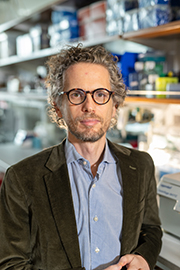
Dr. Dan Landau
The extensive presence of mutation-containing cells alongside normal cells, typically with no obvious difference between them, is known as clonal mosaicism. Now recognized as a common feature of human aging, it arises when a DNA “driver” mutation occurs in a cell, giving the cell and its progeny—often called a clone—a slight but not yet cancerous growth or survival advantage.
The researchers collaborated with Mission Bio, Inc. to develop a technology called single-cell Genotype-to-Phenotype sequencing (scG2P), which allowed them to study clonal mosaicism in solid tissues—prior studies focused mostly on mosaicism in blood cells. Solid tissue samples are stored in ways that make mutational and gene activity information more challenging to access. Moreover, obtaining an accurate picture of solid tissue mosaicism typically requires profiling larger numbers of cells.
The scG2P tool works in a rapid, automated way to sensitively detect mutations across many driver genes, along with the activity of key growth and cell-state genes in each cell. It effectively can determine how certain mutations drive abnormal cell growth and survival.
The team used scG2P to study esophageal tissue samples from six older adults. They found that more than half of the 10,000+ sampled cells contained clonal driver mutations and most had a single driver mutation in a gene called NOTCH1, which normally controls cell maturation, identity, division and survival in the lining of the esophagus and other epithelial tissues in the body. The gene-activity readouts suggested that these NOTCH1 driver mutations induce clonal overgrowth by impairing normal cell development.

Dr. Dennis Yuan
“In NOTCH1-mutant clones, relatively high numbers of cells get stuck in less mature developmental stages, where they stay in the tissue and continue to divide, whereas normal, mature cells move to the tissue surface and are shed,” said study first author Dr. Dennis Yuan, a postdoctoral fellow in the Landau lab.
The next most common driver-mutation gene in the samples was TP53, which makes the p53 protein, a crucial tumor suppressor that is inactivated in many cancers. TP53-mutant clones in the samples showed impaired maturation and also more frequent cell division compared to normal cells.
The findings are consistent with one of the central ideas of cancer biology: a single mutation is usually insufficient for malignancy and cancers arise from a series of mutations, which is increasingly common as we age.
“Can we target these clones in aging tissues to prevent cancer? Can we identify the types of driver mutations that are more likely to give rise to cancer and thus are worth treating? These are questions that people in the field are now asking,” Dr. Landau said.
Many Weill Cornell Medicine physicians and scientists maintain relationships and collaborate with external organizations to foster scientific innovation and provide expert guidance. The institution makes these disclosures public to ensure transparency. For this information, please see the profile for Dr. Dan Landau.
This research is supported by Burroughs Wellcome Fund Career Award for Medical Scientists, Vallee Scholar Award, Blood Cancer United Scholar Award and the Mark Foundation Emerging Leader Award. This work was also supported by the National Cancer Institute (R33 CA267219), the National Human Genome Research Institute and the Center of Excellence in Genomic Science (RM1HG011014) and the National Institutes of Health Common Fund Somatic Mosaicism Across Human Tissues (UG3NS132139-01). This work is supported by the Japan Agency for Medical Research and Development (AMED): The Core Research for Evolutional Science and Technology (CREST) (JP22gm1110011 to S.O.) and the Moonshot Research and Development Program (JP22zf0127009 to S.O.), AMED (JP23ck0106798 to N.K.), the Japan Society for the Promotion of Science (JSPS), Scientific Research on Innovative Areas (JP15H05909), JSPS KAKENHI (JP20H03660 to A.Y.) and the Japan Science and Technology Agency (JST): Fusion Oriented Research for disruptive Science and Technology (FOREST) Program (JPMJFR215V to N.K.) and Moonshot Research and Development Program (JPMJMS2022-25). This work was made possible by the MacMillan Family Foundation and the MacMillan Center for the Study of the Non-Coding Cancer Genome at the New York Genome Center.